
An airport can have advanced parking systems, accurate flight information and detailed terminal maps, yet still leave passengers piecing their journey together. Where should I park? Which entrance should I use? How do I find my gate? And what happens if my flight is delayed or the gate changes?
The information often exists, but the passenger experience remains fragmented. Each service may work perfectly well on its own while the traveler is left to connect the dots. This is where the idea of the intelligent airport becomes particularly interesting. By connecting information from different parts of the airport, we can begin to create an experience that feels like one continuous journey rather than a series of separate steps.
The airport experience begins before the terminal
For many travelers, the airport journey starts on the approach road, in a parking facility or at a drop-off zone. These are the first points of contact with an environment that can be unfamiliar, time-sensitive and sometimes stressful. Finding the right parking area, understanding where to go and estimating how much time is needed to reach the gate are all part of the passenger experience.
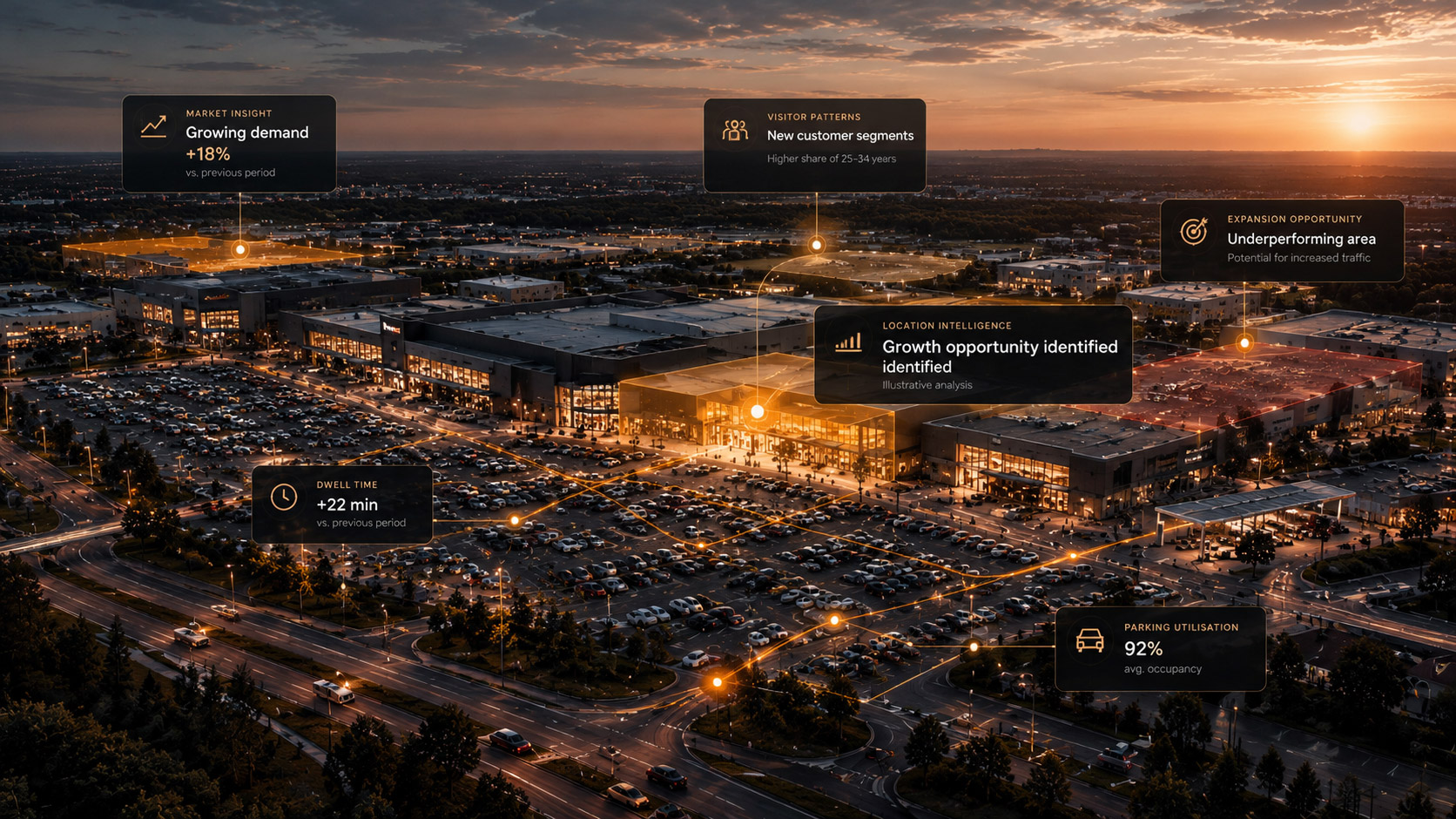
At the same time, these environments generate valuable information. Vehicle arrivals and departures, parking occupancy, traffic flows and activity across different zones can help airports understand how their facilities are being used. Connected with other operational data, this creates opportunities to improve capacity planning, accessibility and the services available to travelers.
But the greatest potential may emerge when this information becomes useful to the passenger directly.
One connected journey, from car to gate
Imagine arriving at an unfamiliar airport. Instead of searching for parking information in one service, checking your flight in another and navigating the terminal through a third, you have access to a single digital experience that brings the relevant information together.
A connected airport service could help you find suitable parking, complete payment and remember exactly where you left your car. A QR code at the parking location could open a mobile experience without requiring a dedicated app. By adding your flight details, you could receive guidance towards the correct terminal and check-in area, supported by an airport map that includes walking routes, floor changes and accessible alternatives.
Once inside, the experience could continue. Flight information, gate assignments and terminal navigation could work together to help you understand where to go and how much time to allow. If your departure gate changes, an updated route could be presented using verified airport information. If your flight is delayed, the service could help you plan the next part of your time at the airport. And when you return from your trip, the same experience could guide you back to your saved parking location.
None of these individual needs is particularly new. What changes the experience is the possibility of connecting them.
This direction also reflects changing passenger expectations. According to IATA’s 2026 Global Passenger Survey, 82% of respondents expressed interest in using a smartphone that combines a digital wallet, passport and loyalty cards to book, pay and navigate airport processes. The demand for more connected digital travel experiences is already evident.
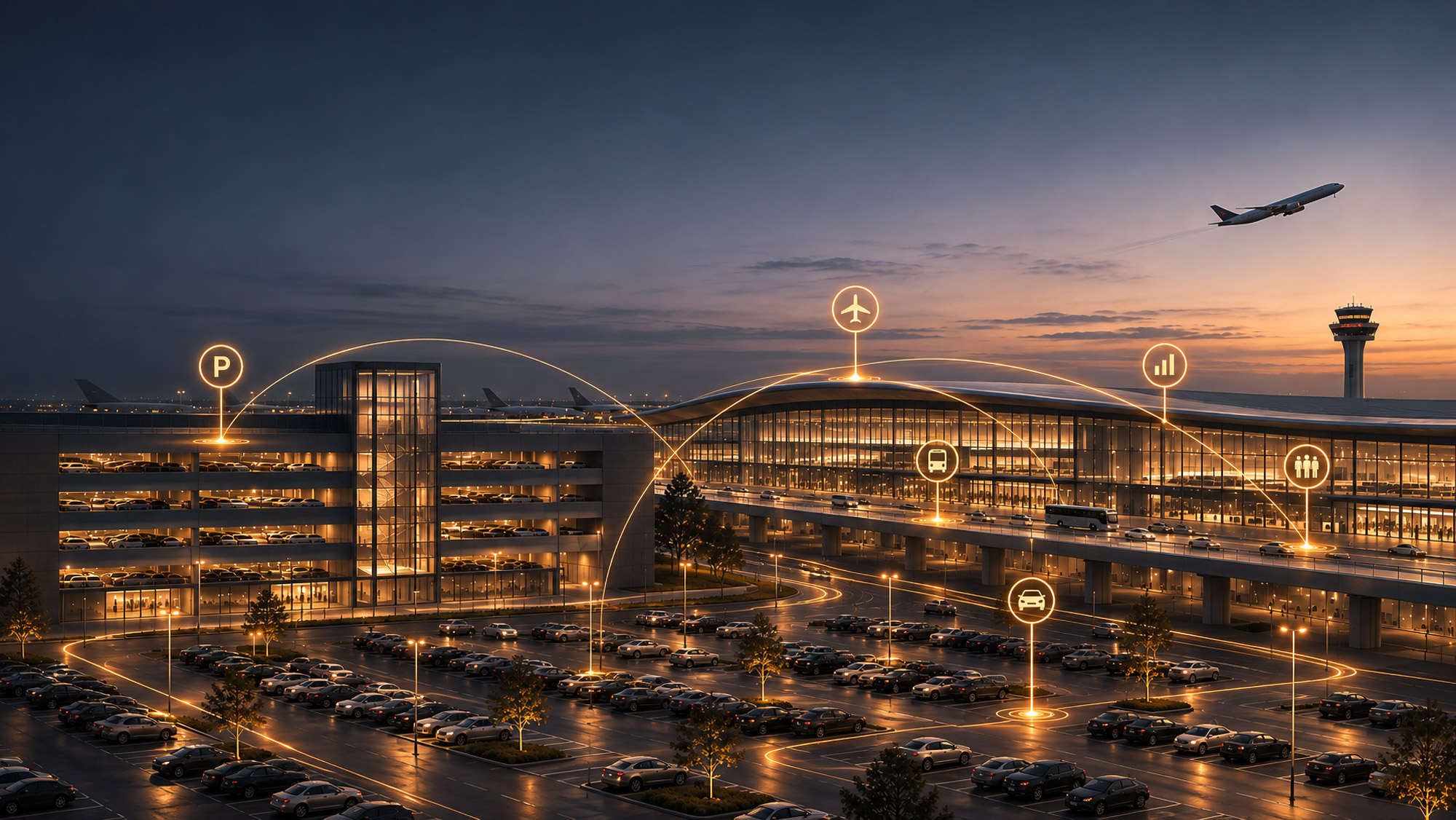
One shared data layer, many connected services
Making this possible requires more than bringing several functions into the same interface. Parking systems, flight information, terminal maps, access services and passenger communication need to exchange relevant information reliably, with appropriate permissions and clear responsibilities.
A shared data layer can provide that foundation. Parking information can be associated with a location, terminal maps can provide routing information and authorised flight data can keep the travel experience updated. Rather than requiring every service to operate independently, a connected system can make the right information available at the moment it becomes useful.
For the passenger, the value is simplicity. Fewer disconnected searches, clearer directions and greater confidence about what happens next. A terminal map becomes more useful when it knows the intended destination. Flight information becomes more useful when it can inform the route to the gate. Parking becomes more useful when it remains connected to the rest of the journey.
Importantly, a shared data layer does not mean collecting every piece of personal information in one place or tracking individuals throughout the airport. Operational analysis can rely on aggregated data, while personalised services should depend on the information travelers choose to provide and the permissions required to use it. The aim is a connected experience built around useful information, not unnecessary surveillance.
Better experiences create new opportunities for airports
A more connected airport environment can benefit operational teams as well as passengers. When information about vehicle movements, parking demand and ground transportation is available in a consistent way, airports can better understand recurring congestion, capacity constraints and changes in activity. These insights can support planning and help teams identify where improvements may have the greatest impact.
For commercial teams, connected services also create opportunities to improve the relationship with travelers. Restaurants, shops and lounges could become part of the digital journey by making relevant information and voluntary offers available at appropriate moments. A traveler with extra time before departure might appreciate discovering a nearby restaurant, while someone approaching boarding needs clear guidance rather than additional distractions.
The opportunity is not simply to introduce more digital services. It is to make existing and future services work together in ways that are genuinely helpful, while giving airport operators better information about how their environment performs.
Building the intelligent airport, one service at a time
At Drifter World, our vision for the intelligent airport builds on a connected foundation of real-world data, mobility intelligence and modular digital services. Our experience with vehicle detection, parking operations and edge technology provides a starting point for understanding the airport’s ground environment. The longer-term opportunity is to connect that foundation with additional airport systems and services, creating a more complete understanding of airport activity and a more coherent experience for travelers.
Reaching that vision is a process. Reliable flight updates require approved data integrations. Indoor navigation depends on accurate terminal maps and suitable positioning methods. Passenger services need clear choices, accessible design and appropriate privacy safeguards. Some capabilities can build on existing technology, while others require development and close collaboration with airports and their partners.
This is why the intelligent airport should be developed around real operational needs and actual passenger experiences. Begin with a service that solves a meaningful problem, connect it with reliable information and build further as new opportunities emerge.
For the traveler, the result should feel remarkably simple: knowing where to park, where to go, when plans change and how to find the way back.
For the airport, it is the opportunity to connect operations, intelligence and services through a shared digital foundation.
The intelligent airport starts on the ground. Its possibilities extend across the entire journey.